
Everything you need to know about A/C and Condensation

Pop open the trunking of any air conditioning unit and you’ll notice 4 main lines running through. Two insulated copper pipes carrying refrigerant, an electrical power cable, and a condensate hose to remove water. Yes, under normal operation (cooling mode) an AC produces water. In the peak of summer, an air con can generate litres depending on humidity, temperature, duration of use etc. Let’s explore how an air con produces water and how technicians manage this in real life.
Why do Air Conditioners produce Condensation?
Warm air passing over a cold surface causes the dew point to fall and water droplets to form. Its not only basic science, we’ve all seen this in our daily lives.
You can notice condensation when:
- A coke can taken out from the fridge is left on the counter
- The mist of a hot shower fogs up the cooler bathroom mirror
- You exhale outside on a cold winter’s morning

Similarly, when the warm air from your room meets cool refrigerant coils, tiny droplets condense. Droplets get bigger and are collected into a drain pan within the unit before heading into the condensate line – basically a garden hose – through the trunking and are dispelled outside. Condensate lines can drain via gravity or, when trunking goes up into the attic for example, via a condensate pump.
What is a Condensate Pump?
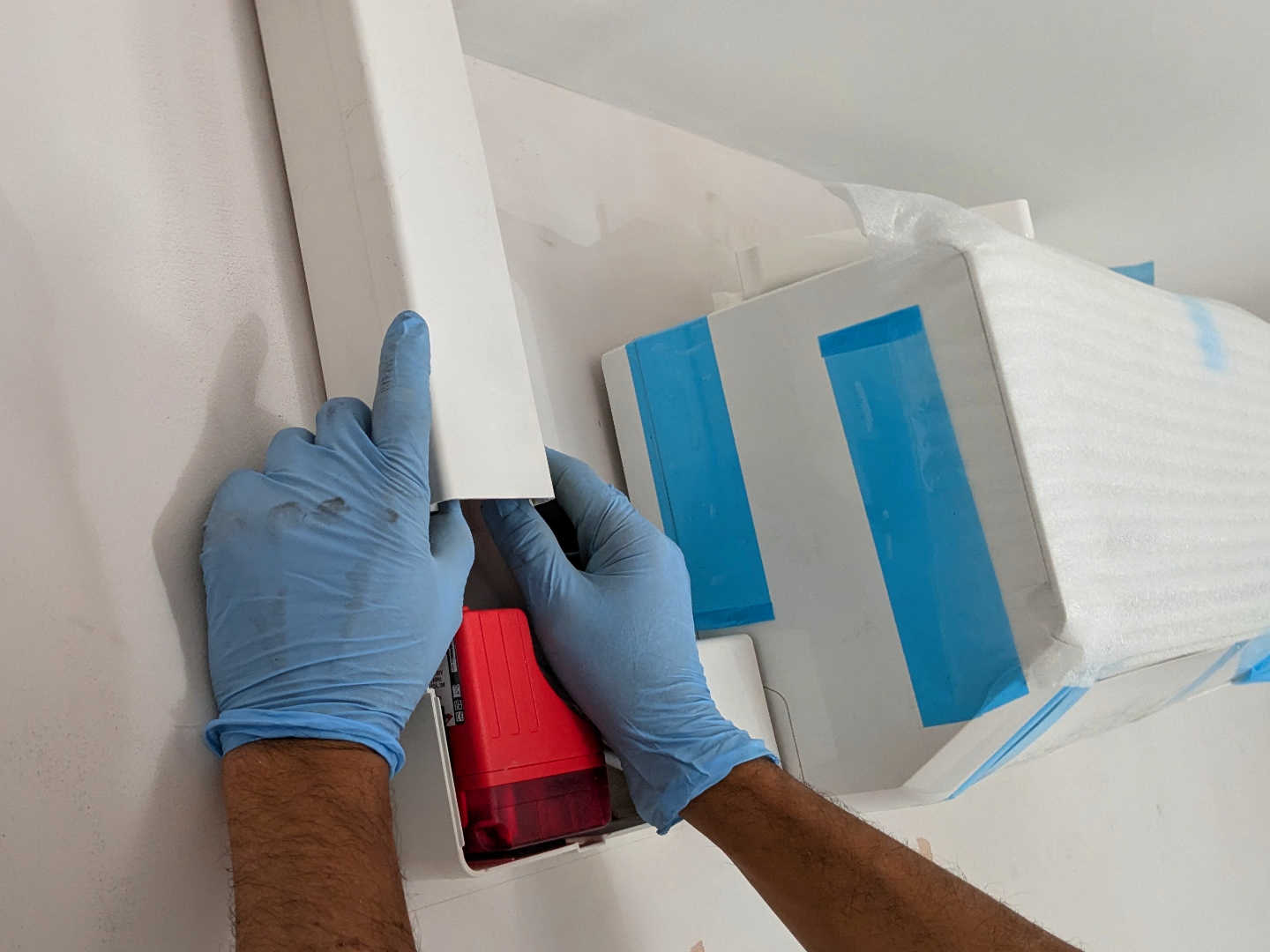
A condensate pump is a compact piece of equipment designed to carry water away from from your air conditioning unit when gravity cannot. They’re housed neatly within in the trunking to provide a tidy finish and are as quiet as an AC unit itself. Condensate pumps are not cheap but are essential for having an aesthetic install. Far better than having unnecessary, additional pipework and trunking running across the walls.
When A/C Starts Leaking Water
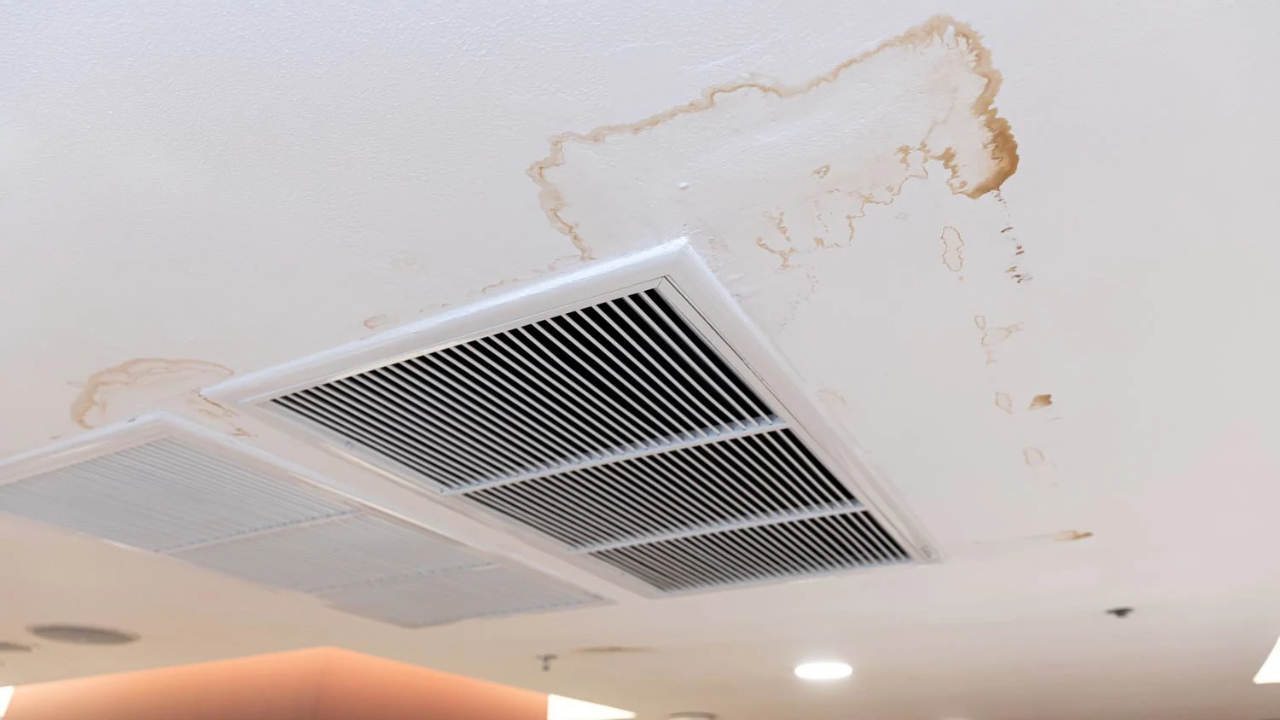
If condensate goes unmanaged, water build up will damage electronic components and/or lead to rusting. Sometimes (rarely) things can go wrong. Stagnant water at room temperature becomes a breeding ground for pathogenic bacteria and fungi which isn’t the best thing for your health. If enough water builds up and leaks out, you may find a puddle on the floor and even moisture damage to your wall.
Air conditioners can leak water due to either a clogged drain pipe, faulty condensate pump, drain pan issues, or any other problem.
Air Conditioning Water Leak Repair
It’s difficult to know the cause of the leak right away. It could simply be that your drain lines need flushing (easy to do). Or upon further inspection, water might have damaged some internal parts (necessitating a costly repair).
Fortunately getting a professional to service your air conditioning system means we cover all possible bases – pump failure, drain pan, external unit not performing, etc. Additionally our technicians check air flow, temps, and clean filters to maintain system efficiency. We take the hassle out of guessing the source of the problem and give you a proper diagnosis. Or to prevent such issues why not get in touch to schedule a service?